Pennum Porattum Review: Unpacking the Metaphors of Fear and Violence in a Rural Tapestry
In the vibrant, often tumultuous landscape of Indian cinema, certain films emerge not just as entertainment but as profound social commentaries, challenging audiences to look beyond the immediate narrative. Rajesh Madhavan’s directorial debut, Pennum Porattum, is precisely such a film. Far from being a mere chaotic comedy, this cinematic venture dives deep into the human psyche, exposing layers of greed, fear, and senseless cruelty, all while maintaining a remarkably unique narrative voice. This Pennum Porattum Review explores how the film masterfully uses absurdity and animal perspectives to dissect the moral decay of society, making it a truly thought-provoking experience.
At its heart, Pennum Porattum, which translates to "Girl and the Fools' Parade," unfolds a story that is both timeless and universally resonant. It’s a compelling exploration of how violence and aggression become inherited and normalized across generations, disguised within a quirky, satirical framework. The film invites us into a world where familiar tropes are recontextualized, allowing for a fresh, often unsettling, reflection on mankind’s relationship with itself and the natural world.
The Animal's Gaze: A Unique Perspective on Human Folly
What truly sets Pennum Porattum apart is its audacious narrative choice: telling a fundamentally human story through the eyes of animals. The primary narrator is Suttu, a dog owned by Baburaj, a friend of the protagonist Kumar. This animal perspective isn't just a gimmick; it's a powerful metaphorical lens that allows the film to comment on human actions with a detached, yet deeply insightful, wisdom. By observing the "fools' parade" from the sidelines, Suttu provides an unfiltered view of societal hypocrisy and the absurd lengths to which human beings will go, driven by rumour, fear, and prejudice.
The story is meticulously crafted, following two parallel tracks that inevitably collide. On one track, a rumour spreads that Suttu is rabid, triggering a village-wide manhunt fueled by irrational fear. Simultaneously, a WhatsApp chat between Kumar (Dinesh Pepo), who has dared to defy traditional marriage norms, and Charulatha (Raina Radhakrishnan) ignites a massive social uproar, escalating into a bitter family feud. The brilliance of writer Ravisankar's screenplay lies in how these seemingly disparate threads weave together, revealing a haunting parallel between the perceived "rabid" dog and the very real "rabid" violence festering within human society. This unique storytelling approach elevates the film from a simple rural drama to a profound allegory, where the animals become silent judges of humanity's moral bankruptcy.
Crafting Chaos: Direction, Performance, and Visual Metaphors
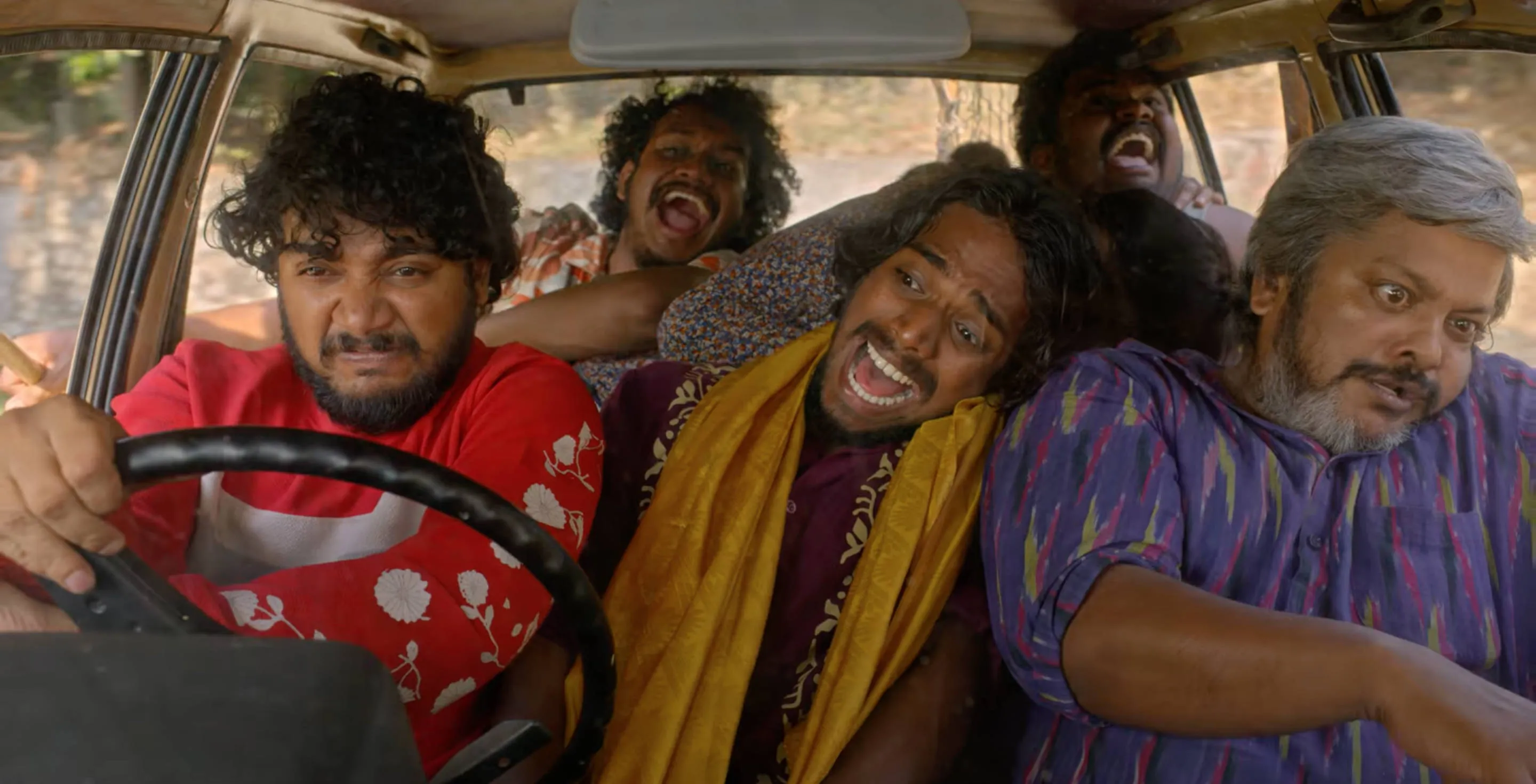
Rajesh Madhavan, in his directorial debut, makes a remarkably confident statement. Despite appearing in a cameo himself, he primarily assembles a cast of mostly new faces, a bold move that pays off handsomely. Their raw, natural performances, delivered with a satirical flair rooted in the distinct Palakkad slang, imbue the film with an authentic sense of realism and urgency. Characters like Sujathan Mash (Shanuj Alanallur), the sly instigator leading the Samsaram Club, become memorable caricatures of societal archetypes, their hypocrisy laid bare for all to see. This commitment to fresh talent and regional authenticity is a significant factor in the film's impact.
Beyond the compelling performances, the film's technical craftsmanship contributes immensely to its atmospheric tension and narrative depth. Sabin Uralikandy’s striking cinematography captures the gritty, strange beauty of Pattada village, redefining the visual language of rural life on screen. The village, whose name itself is associated with death, signals the film's dark and ironic tone from the very outset. Chaman Chacko’s crisp editing further tightens the two-hour runtime, allowing the escalating chaos to build effectively. The film also employs powerful visual metaphors that resonate long after viewing:
- The Narrow Path: An interval sequence shows villagers and a herd of goats crossing a narrow path together, a poignant symbol of shared fear and blind conformity. Both humans and animals are caught in a current of irrationality, driven by instinct and rumour.
- Momentary Truce: In another striking moment, warring human factions momentarily forget their hatred and seek shelter together when news spreads about Suttu’s arrival. This highlights how an external threat, even a perceived one, can temporarily override deep-seated animosities, revealing a primal common ground.
These elements, combined with Madhavan's clear vision, make the film a technical as well as thematic triumph. It’s a testament to the power of a director’s conviction, proving that an ambitious concept can be executed brilliantly with the right artistic choices.
The Echo of Fear: Universal Resonances and Social Commentary
The core message of Pennum Porattum, as beautifully echoed in Suttu’s monologue (voiced by Tovino Thomas), is simple yet profound: "The world is vast enough for us to go." This line encapsulates the film's critique of human territorialism, baseless aggression, and the self-inflicted chaos born from fear and misunderstanding. The film’s narrative—where a rumour about a rabid dog triggers a manhunt and escalates into a violent human conflict—serves as a powerful allegory for how easily societies can descend into mob mentality and irrationality, often at the expense of innocent lives, both human and animal.
The film doesn't shy away from depicting the moral decay of society, showing how greed, baseless rumours, and inherited aggression become normalized across generations. The character of Sujathan Mash, an instigator who thrives on discord, stands as a sharp irony, representing the corrosive elements within any community. Pennum Porattum masterfully strips away social hypocrisy, revealing the ugly underbelly of collective human behavior. It’s a stark reminder that the "rabies" within humanity—our capacity for violence, prejudice, and unfounded fear—is far more dangerous than any animal affliction.
This deep social commentary makes Pennum Porattum more than just an engaging watch; it's an invitation for introspection. It prompts viewers to consider the origins of their own biases and fears, and how easily collective anxieties can be manipulated. The film's audacious and chaotic comedy, as noted in some analyses, is akin to "Jallikattu on steroids," an intense, visceral experience that leaves a lasting impression. For further insights into the film's unique blend of satire and social critique, you might be interested in this perspective: Rajesh Madhavan's Pennum Porattum: Chaotic Comedy & Bold Satire.
Conclusion: A Bold, Unforgettable Cinematic Statement
In conclusion, Pennum Porattum stands as a remarkable and essential piece of contemporary cinema. Rajesh Madhavan’s directorial debut is a testament to the power of conviction, delivering a film that is at once absurdly comedic and deeply disturbing. It’s a comprehensive examination of human greed, cruelty, and the self-destructive cycles of violence, all delivered with sharp imagery, layered metaphors, and bold satire.
This Pennum Porattum Review highlights a film that transcends typical genre boundaries, offering not just entertainment but a profound societal reflection. By daring to tell its story from an unconventional viewpoint and by not shying away from uncomfortable truths, Pennum Porattum cements its place as a thought-provoking, universally resonant film that will continue to spark conversations about what it truly means to be human in a world often consumed by its own follies.