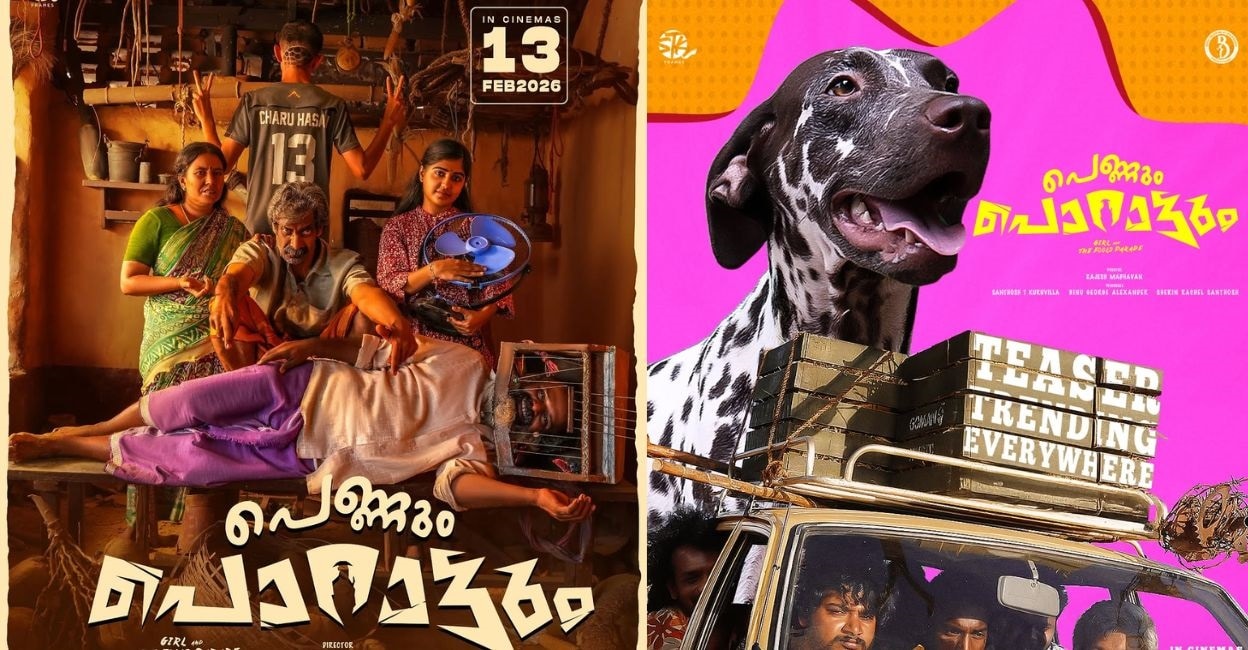
Rajesh Madhavan's Pennum Porattum: A Deep Dive into Chaotic Comedy and Bold Satire
In the vibrant landscape of Malayalam cinema, a new voice has emerged, blending uproarious chaos with profound social commentary. Actor Rajesh Madhavan's directorial debut, Pennum Porattum, is far more than just a comedic spectacle; it's a daring and thought-provoking exploration of human nature, told through a remarkably unique lens. This Pennum Porattum Review delves into how Madhavan crafts a narrative that, despite its familiar tropes, resonates with timeless themes of greed, cruelty, and the moral decay of society, all observed from an unexpected, animal perspective.
From its opening frames, Pennum Porattum establishes itself as a film unafraid to challenge conventions. While the title, roughly translating to "Girl and the Fools' Parade," hints at the absurdity within, the film's true genius lies in its ability to peel back layers of social hypocrisy, exposing uncomfortable truths with a satirical wit rooted deeply in Palakkad slang. Madhavan's confident first statement as a director is not just about the laughter it provokes, but the lingering questions it plants, making it a must-watch for those seeking cinema that entertains as much as it enlightens.
A Daring Debut: Rajesh Madhavan's Vision and the Animal Gaze
Rajesh Madhavan, a familiar face in Malayalam cinema known for his nuanced supporting roles, steps behind the camera with remarkable assurance in Pennum Porattum. His directorial vision is immediately apparent in his choice to assemble a cast primarily of new faces. This decision imbues the film with an extraordinary sense of realism and urgency, allowing their raw, natural performances to shine without the baggage of established star personas. These fresh talents deliver impressively authentic portrayals, particularly within the film's satirical framework, grounding the absurdities in a relatable human (and animal) experience.
The film's most striking innovation, however, is its narrative framing. The story is largely observed through the eyes of Suttu, a dog owned by Kumar's friend Baburaj. This unique perspective elevates Pennum Porattum beyond a simple village comedy; it becomes a profound metaphorical reflection on mankind's senseless cruelty towards animals and the wider natural world. By allowing animals to metaphorically "judge" men, Madhavan brilliantly flips the script, forcing audiences to confront their own actions and biases from an empathetic, non-human viewpoint. It's a powerful tool that transforms the familiar into the profoundly thought-provoking, prompting us to consider how our choices appear when stripped of human justifications. For a deeper dive into this fascinating narrative device, consider reading our detailed Pennum Porattum Review: Animals Judge Human Greed & Cruelty.
Pattada: A Village of Irony and Inherited Folly
The world of Pennum Porattum is meticulously crafted, beginning with its evocative setting. The story unfolds in the village of Pattada, a name itself heavy with irony, as it's often associated with death. This choice immediately signals the film's dark, satirical tone. Pattada isn't your idyllic rural backdrop; it's strange, gritty, and visually striking, redefining the typical cinematic portrayal of village life. Its visual aesthetic perfectly mirrors the eccentricities and moral ambiguities of its residents, making the village almost a character in itself.
The plot is set in motion by a seemingly innocuous WhatsApp chat between Kumar (Dinesh Pepo) and Charulatha (Raina Radhakrishnan). This simple digital exchange sparks a massive uproar, as Kumar has already defied traditional norms of marriage, making him the unsuspecting epicentre of a moral storm. From this opening conflict, the film deftly establishes one of its core themes: how violence and aggression are not just isolated incidents but are often inherited, normalized, and even celebrated across generations within a community. The raw energy of the newcomers, speaking in authentic Palakkad slang, lends immense credibility and comedic timing to the escalating tensions. Characters like Sujathan Mash (Shanuj Alanallur), the sly instigator at the Samsaram Club, serve as sharp ironies in the narrative, highlighting how figures meant to guide or unite can often be the primary architects of discord and division.
Weaving Threads of Chaos: Rumours, Rabies, and Human Hypocrisy
Ravisankar's clever screenplay structures Pennum Porattum across two parallel, yet intrinsically linked, narrative tracks. On one hand, there's the escalating rumour that Suttu, the dog, is rabid, triggering widespread fear and a chaotic manhunt. Simultaneously, we witness the intensifying conflict between the families of Kumar and Charulatha, fuelled by gossip and moral outrage. These two threads don't just run concurrently; they collide into a single, overwhelming whirlwind of chaos, exposing the inherent foolishness and moral decay within the community. Meanwhile, Charu and her friend Meena Kumari (Akshaya Vijayakumar) remain blissfully unaware of the storm they've inadvertently unleashed, adding a layer of ironic detachment.
As the villagers' behaviour becomes increasingly absurd, their deeply ingrained social hypocrisies are systematically stripped away. The fear surrounding Suttu acts as a powerful catalyst, revealing the true nature of individuals and the collective mob mentality. The film uses striking visual metaphors to underscore its themes:
- The Interval Sequence: Villagers and a herd of goats crossing a narrow path together symbolizes shared fear and blind conformity, highlighting how easily humans can be led by instinct rather than reason.
- Shared Shelter: In a poignant moment, warring groups momentarily forget their hatred and take shelter together when news spreads about Suttu's arrival, demonstrating how a common external threat can temporarily override internal divisions, only for those divisions to resurface later.
These powerful visual cues, expertly captured by Sabin Uralikandy's striking cinematography and Chaman Chacko's crisp editing, heighten the tension throughout the film's two-hour runtime. They serve as potent reminders of how easily rumours can spiral into mass hysteria, and how quickly collective fear can expose the underlying "rabid" violence latent within human beings. For a deeper analysis of these powerful symbols, explore Pennum Porattum: Unpacking the Metaphors of Fear and Violence.
The Profound Message: "The World is Vast Enough..."
At its core, Pennum Porattum draws a haunting parallel between the literal "rabid" dog and the metaphorical "rabid" violence that often consumes human beings. The film's brilliance lies in how it articulates this message, culminating in a truly impactful moment. The core message is beautifully echoed in Suttu's monologue, voiced by none other than Tovino Thomas, whose distinctive voice lends an incredible depth to the animal's perspective: "The world is vast enough for us to go." This simple yet profound statement encapsulates the film's plea for coexistence, understanding, and a re-evaluation of humanity's place within the larger ecosystem.
The technical aspects of the film are equally commendable. Sabin Uralikandy's cinematography not only captures the grit and strangeness of Pattada but also crafts powerful visual metaphors that linger long after the credits roll. Chaman Chacko's crisp editing maintains a frenetic pace, expertly building tension and guiding the audience through the film's dual narrative tracks. Rajesh Madhavan’s conviction as a director shines through every frame, ensuring that even amidst the absurdism, the narrative never descends into mere nonsense. Instead, it maintains a sharp, purposeful satire that is both entertaining and deeply reflective.
Conclusion
Rajesh Madhavan's Pennum Porattum stands as a bold and essential piece of contemporary Malayalam cinema. It's a chaotic comedy on the surface, but underneath, it's a meticulously crafted satire that dissects human nature with surgical precision. Through its unique animal perspective, compelling performances from a fresh cast, and a village setting that is as much a character as its inhabitants, the film offers a profound commentary on inherited violence, social hypocrisy, and the dangers of mob mentality. This Pennum Porattum Review concludes that the film is a testament to the power of a director's vision, proving that even with a debut, one can deliver a work of significant artistic and thematic weight. It’s an experience that will make you laugh, ponder, and perhaps, look at the world a little differently.